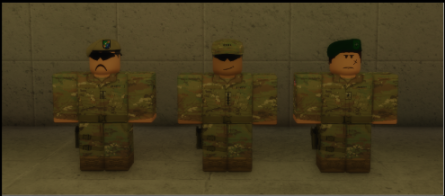
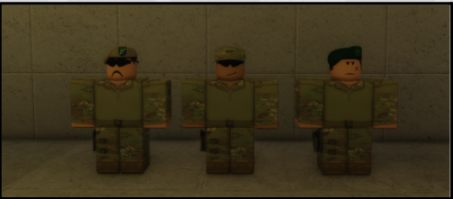
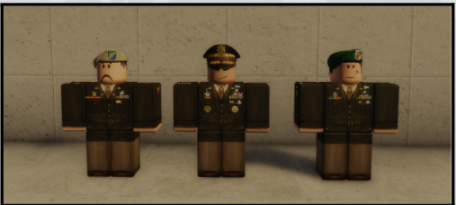
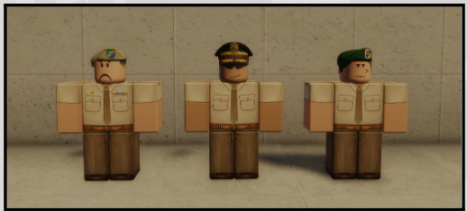
Commanding General
Rank & Paygrade: General, O10
The Commanding General is the top authority in ASOC. They set the goals and standards of the command. The Commanding General will host meetings with the command and staff, communicate problems and make changes in the command, will speak with staff outside of meetings to know more about how units are performing. Any major changes that are going to be made to the command need to get the approval of the Commanding General. The Commanding General should also have the final authority in removing high ranking staff.
Deputy Commanding General
Rank & Paygrade: Lieutenant General, O9
The Deputy Commanding General's main duty is to assist the Commanding General with any tasks they have. Having clear oversight of how your Chief of Staff and officers are performing should be something to be mindful of, if changes need to be made. Giving ideas and expressing your own opinions to the Commanding General when making changes to the command. Promoting officers through #officer-rank-request and demoting when needed. Take charge when the Commanding General is not present. Decisions that aren't the most important, can be approved by the Deputy Commanding General.
Command Sergeant Major
Rank & Paygrade: Command Sergeant Major, E9B
They are the highest-ranking enlisted personnel in the command, they share the same grade as Regimental Sergeant Majors, but they have separate roles and responsibilities. Command Sergeants Majors have authority over every single enlisted personnel in ASOC. They are the senior-most NCO and the final authority on standards and discipline, as well as all areas of military life that troops encounter. Command Sergeants Majors work alongside other senior enlisted staff giving essential insight and assistance as they make decisions on how to prepare their units to complete their tasks.
Chief of Staff
Rank & Paygrade: Major General, O8
The Chief of Staff is the major link between ASOC HICOM and regimental staff. They need to keep close connections with regimental HICOM, and oversee all staff. They think of solutions to ongoing problems, and inform staff about changes that need to be made. They are to carry out orders from the Commanding General and Deputy Commanding General. Orders are to be executed and communicated from the Chief of Staff to regimental staff.
Commanding Officer
Rank & Paygrade: Major General, O8
The Commanding Officer's responsibility is to oversee their regiment and ensure every new member is acting accordingly and ensuring the best interests of their regiment moving forward. Likewise, High Command are expected to work together and make major decisions about their regiment that will constantly keep it moving in a positive direction. A Commanding Officer can advance to the ASOC High Command positions by contributing greatly to their regiment and proving themselves as an effective leader.
Executive Officer
Rank & Paygrade: Brigadier General, O7
The Executive Officer's responsibility is to assist the Commanding Officer in their day-to-day tasks and ensure staff is working to their full effectiveness. The Executive Officer advises and informs the Commanding Officer on the state of their regiment. The Executive Officer also communicates with the Commanding Officer and the Command Sergeant Major on major decisions that can impact their unit greatly. Moreover, the Executive Officer does most of the Administrative tasks within their unit. An Executive Officer can advance to Commanding Officer by showing dedication, leadership, teamwork and administrative abilities.
Regimental Sergeant Major
Rank & Paygrade: Command Sergeant Major, E9B
The main focus of the Regimental Sergeant Major is to watch over the enlisted of their regiment. They must create guidelines and standards for the enlisted to follow. This also means hosting enlisted events to keep up morale. The Regimental Sergeant Major is also responsible for submitting the Regimental Sergeant Major report bi-monthly to the ASOC Command Sergeant Major, which is created from the weekly reports they have received from their Battalion Sergeant Majors. The Regimental Sergeant Major needs to work closely with their Commanding Officer and Executive Officer to create cohesion throughout the entire unit.
Battalion Commanding Officer
Rank & Paygrade: Colonel, O6
Taking the role as the head of the battalion, the Battalion Commanding Officer otherwise known as the BCO takes care and leads the whole battalion, corroborating the progress of the battalion in a forward motion and must be able to listen, observe, and be willing to change course when necessary. The Battalion Commanding Officer handles all disciplinary issues, any circulation, and enforce rules for their battalion. They host battalion wide events and ensure that the Battalion Executive Officer and Battalion Sergeant Major are also performing well.
Battalion Executive Officer
Rank & Paygrade: Lieutenant Colonel, O5
The BXO or Battalion Executive Officer's responsibility is to ensure that the battalion is up to par. This can include working with the Battalion Commanding Officer and Battalion Sergeant Major to determine rules, and expectations that must be set into place. Battalion Executive Officers host Battalion wide events for their Battalion and generally manage their battalion by hosting meetings, classrooms, patrols, combat evaluations, and inspections to ensure their battalion is up to the standards that ASOC must represent. The Battalion Executive Officer also looks after their commissioned personnel and recommends personnel to OCS.
Battalion Sergeant Major
Rank & Paygrade: Sergeant Major, E9A
The BSM or Battalion Sergeant Major has an extremely vital responsibility for their battalion. They must combine the Company First Sergeant reports to make a Battalion Sergeant Major report, which will be redirected to the Regimental Sergeant Major who then writes their reports for the CSM of ASOC, and beyond. The Battalion Sergeant Major works with the Battalion Executive Officer and Battalion Commanding Officer to ensure that their battalion is functioning properly and up to ASOC expectations. The Battalion Sergeant Major looks after all enlisted personnel in their battalion.
Company Commanding Officer
Rank & Paygrade: Major, O4
The Company Commanding Officer is incharge of overseeing their company and making sure they do their jobs skillfully and diligently. They are responsible for all company-level activities. They supervise and provide guidance to, and direct the company staff and platoon leaders in ensuring all activities and training are planned, coordinated, and executed efficiently. They set the standard and direction of the company and build an effective company Chain of Command and develop a positive command climate.
Company Executive Officer
Rank & Paygrade: Captain, O3
The Company Executive Officer aka CXO is in charge of making sure everyone has the correct role/rank in their Company. They will take charge of the Company if the CCO is absent as Acting CCO. The CXO will assist CCO in overseeing the company. This individual is second in command; assumes command and commander responsibilities in the Company Commander's absence and supervises and coordinates the efforts of the company staff in planning coordination, and execution of company events ensures company staff suspensions are met, and remains knowledgeable of the current status of staff actions.
Company First Sergeant
Rank & Paygrade: First Sergeant, E8
The Company First Sergeant's primary objective is to ensure that they complete their Company First Sergeant report, which consists of analyzing their company's performance, and redirecting that information to their Battalion Sergeant Major. These statistics and information is vital to see if progress is being made or lost, on a week-to-week basis. The Company First Sergeant also works with the Company Executive Officer and the Company Commanding Officer to ensure their company is functioning properly and up to ASOC expectations. This statistical information can greatly help a company by providing a positive feedback loop. The Company First Sergeant also makes sure all enlisted personnel are performing up to their company's standards.
Head Instructor
Rank & Paygrade: First Lieutenant, O2
A Head Instructor's main purpose is to oversee all of the instructors and to keep them in check, they are to correct them at any case of inaccuracy, answer their questions and help them in any way. Assigned with duties such as hiring new-comers, supervising, hosting phases and overall being a role model to instructors that are at a lower rank.
Assistant Head Instructor
Rank & Paygrade: Second Lieutenant, O1
The Assistant Head Instructor aka AHI has a rank lock of O1. They oversee and supervise the Senior Instructors, Junior Instructors, and Instructors. They also have the job of hosting phases just like regular instructors.
Platoon Leader
Rank & Paygrade: First Lieutenant, O2
Platoon Leaders can host selections for their company, and bring members into their company. Platoon Leaders have an important role of supervising Squad Leaders who have never hosted a selection. Platoon Leaders are responsible for the entire platoon that they possess. They must assess their platoon to ensure that they are up to ASOC standards, can host combat evaluations, and such to ensure the top quality for their platoon as well as the entire company. However their primary focus is their Platoon.
Platoon Sergeant
Rank & Paygrade: Sergeant First Class, E7
Platoon Sergeants host selections for their company, and bring members into the company. Except for this time they do it for the entire platoon, rather than just a squad. Not only that, but they also work directly with the Platoon Leader, as well as company HICOM to ensure their platoon is up to expectations.
Squad Leader
Rank & Paygrade: Staff Sergeant, E6
Squad Leaders can host selections for their company, and bring members into their squad to keep it active and up to expectations. The Squad Leaders can also host events for regular personnel as a part of their weekly quota for their activity basis. The Squad Leader works with the Platoon Sergeant and Platoon Leader to ensure top quality within their squad. Squad Leaders need to report to their Platoon Sergeant/Platoon Leader about how their squad is doing, and if any changes can/should be made.